
Smart Contract

Smart contracts are self-executing agreements with the terms of the contract directly written into lines of code. These contracts are deployed on a decentralized blockchain network, such as Ethereum, and automatically execute actions based on predefined conditions without the need for intermediaries.
Instead of relying on traditional legal contracts that often involve manual processing, verification, and enforcement, smart contracts automate the entire process, making it more efficient, transparent, and secure. They enable parties to exchange assets and conduct transactions in a trustless manner, eliminating the need for intermediaries like banks, brokers, or lawyers.
At a fundamental level, smart contracts consist of three main components: the agreement, the code, and the blockchain. The agreement outlines the terms and conditions of the contract, similar to traditional legal contracts. The code is the set of instructions written in a programming language to govern the behavior of the smart contract. The blockchain is the decentralized network that securely stores and verifies the execution of smart contracts.
Smart contracts function by automatically executing actions when predetermined conditions are met. These conditions, often referred to as “if-then” statements, are built into the code and can be as simple or complex as required. For instance, a simple smart contract could automatically release funds to a seller when a buyer receives and confirms the delivery of goods.
Key Features And Characteristics of Smart Contract:
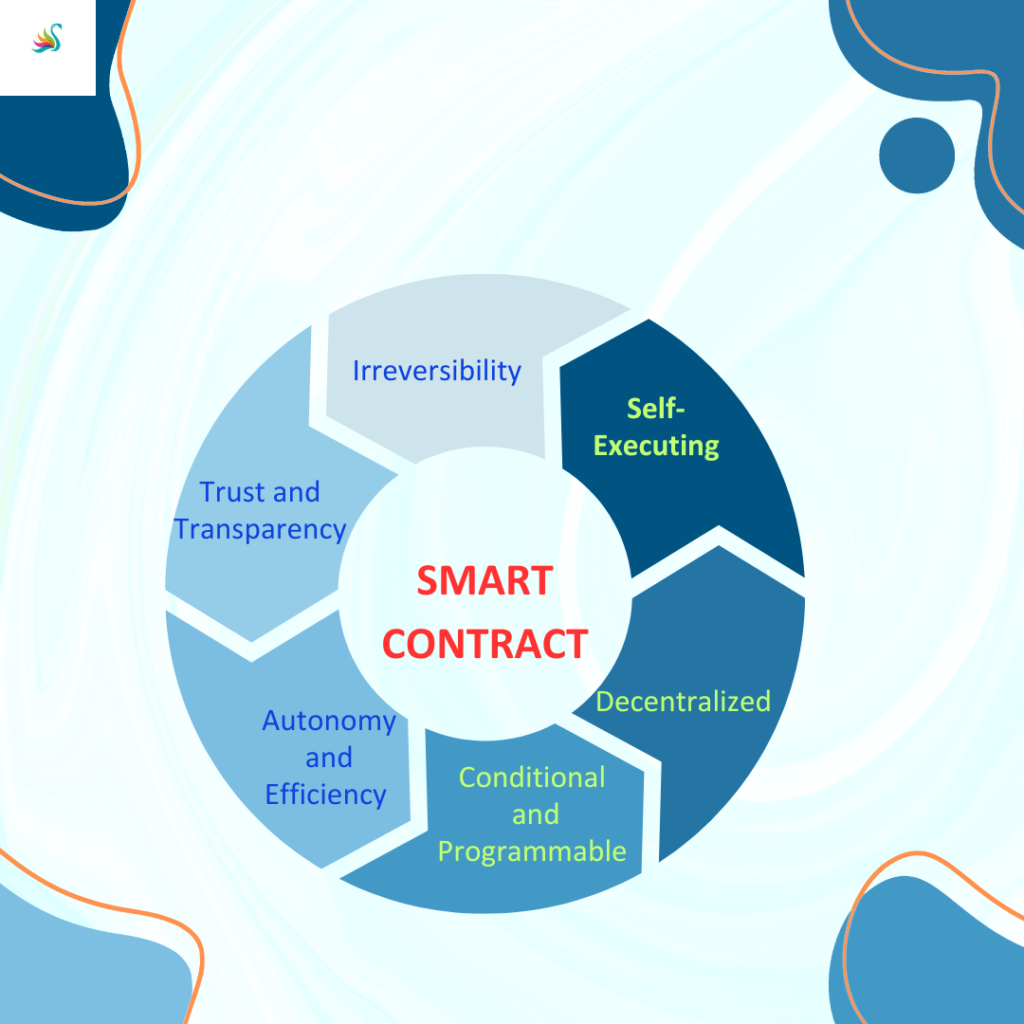
1. Self-executing: Once a smart contract is deployed on the blockchain, it operates automatically according to the predefined rules encoded within its code. The contract executes and enforces itself without requiring any manual intervention.
2. Decentralized: Smart contracts run on a blockchain network, which is distributed across multiple computers or nodes. This decentralization ensures that no single entity has control over the contract’s execution, making it more resistant to censorship or manipulation.
3. Conditional and programmable: Smart contracts can include conditional statements and logic, allowing them to respond to specific events or triggers. They can hold and distribute funds based on predefined conditions, execute specific actions when certain criteria are met, or interact with other smart contracts or decentralized applications (DApps).
4. Autonomy and efficiency: By eliminating intermediaries or trusted third parties, smart contracts streamline the process, reducing delays, paperwork, and costs. The automation and efficiency of smart contracts can lead to faster, more accurate, and cost-effective transactions.
5. Trust and transparency: Smart contracts provide transparency as they are stored on a blockchain, which is a public and immutable ledger. All parties involved can view and verify the contract’s code and its execution history, promoting trust and reducing the need for blind reliance on intermediaries.
6. Irreversibility: Once a smart contract is deployed on a blockchain and its conditions are met, the execution is typically irreversible. This immutability ensures that the contract’s terms and outcomes cannot be modified by any party, providing a high level of security and eliminating the risk of fraud or manipulation.
Examples /Application of Smart Contract:
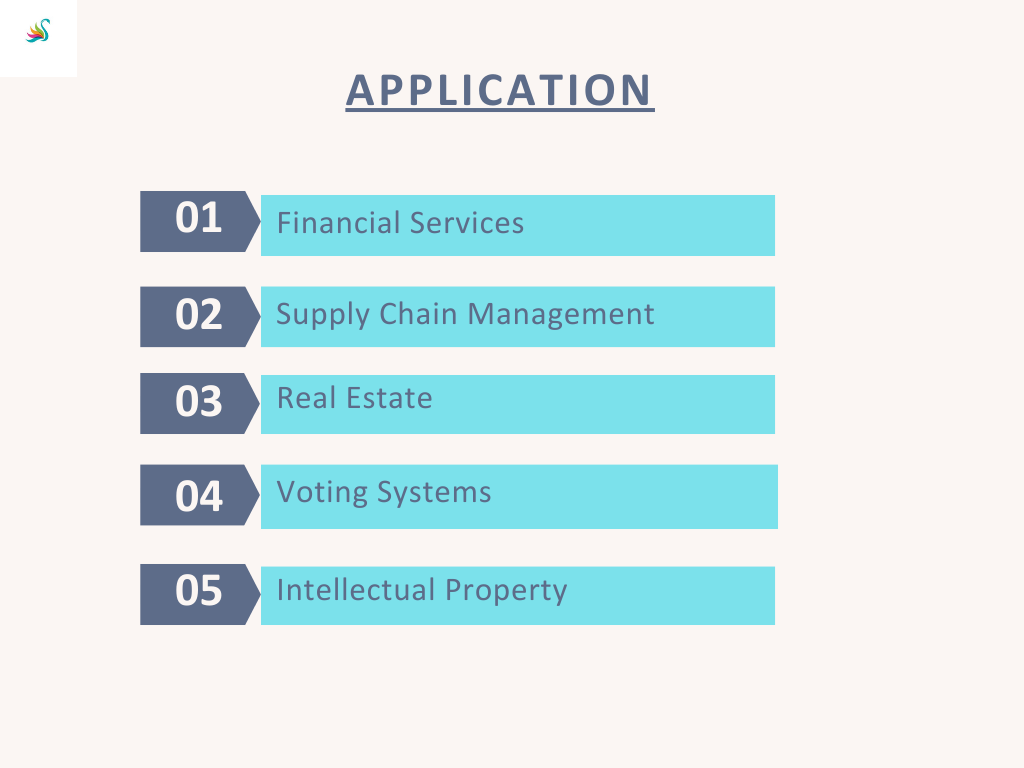
1. Financial Services: Smart contracts can revolutionize lending, insurance, and derivatives by automating processes like loan approvals or claim settlements. Complex transactions can be executed seamlessly and without the need for trust in intermediaries.
2. Supply Chain Management: Tracking and verifying the movement of goods across the supply chain is made easier with smart contracts. They can automate tasks such as inventory management, product authentication, and payment settlements, reducing fraud and improving transparency.
3. Real Estate: Smart contracts can streamline real estate transactions by automating tasks such as title transfers, escrow arrangements, and payment settlements. This reduces the potential for errors and eliminates the need for middlemen.
4. Voting Systems: Smart contracts can enhance the security and transparency of voting processes. Immutable records on the blockchain enable verifiable, tamper-proof elections, ensuring accuracy and minimizing fraudulent activities.
5. Intellectual Property: With smart contracts, artists, musicians, and authors can protect their intellectual property rights without the involvement of legal intermediaries. Payments for intellectual property usage can be automatically enforced, enabling artists to receive royalties instantly and transparently.
Advantages of Smart Contracts:
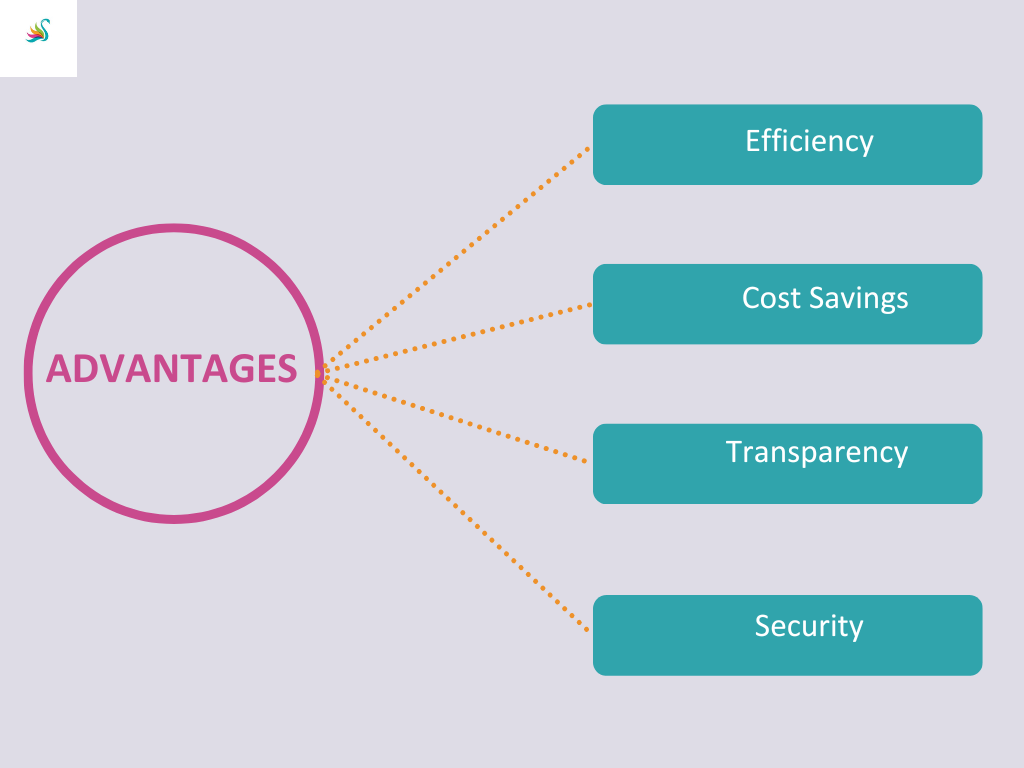
1. Efficiency: Smart contracts eliminate manual processing, reducing human error and processing time. They enable instant verification, execution, and settlement of transactions, saving time and effort.
2. Cost Savings: By removing intermediaries and automating processes, smart contracts can significantly reduce administrative costs associated with legal agreements.
3. Transparency: The decentralized nature of blockchain ensures transparency as all parties have access to the same copy of the contract, minimizing disputes and making the agreement visible to all participants.
4. Security: Smart contracts are tamper-proof and stored on a distributed network, making them highly resistant to hacking or unauthorized alterations. This enhances the overall security of transactions.
Limitations of Smart Contracts:
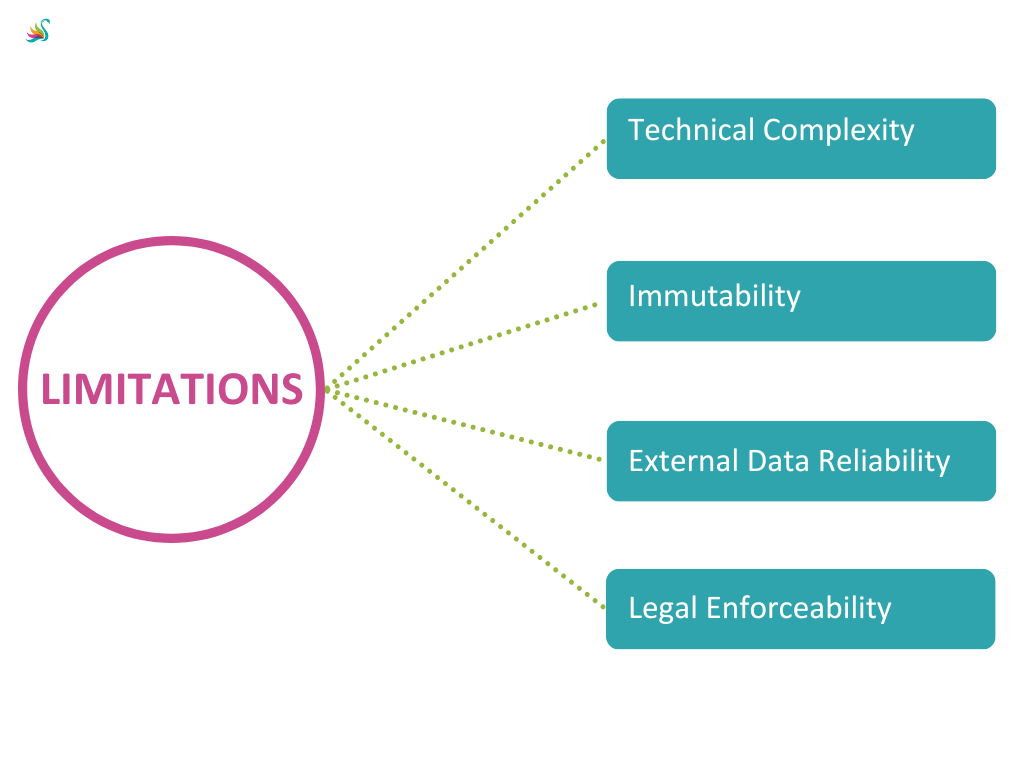
1. Technical Complexity: Developing and auditing smart contract code requires expertise in programming and blockchain technology. Mistakes in coding can lead to vulnerabilities, potentially compromising the entire contract.
2. Immutability: Once deployed on the blockchain, smart contracts cannot be altered. This poses a challenge if errors are identified or terms need to be modified, requiring careful consideration during the contract drafting phase.
3. External Data Reliability: Smart contracts rely on external data sources to trigger actions. Ensuring the accuracy and reliability of these external inputs can be challenging, potentially affecting the execution of the contract.
4. Legal Enforceability: While smart contracts can have legal implications, their enforceability in traditional legal systems varies across jurisdictions. The lack of legal precedence and regulatory frameworks poses challenges for dispute resolution and legal enforcement.
Conclusion:

Smart contracts have already displayed immense potential in transforming various industries. From streamlining supply chains to revolutionizing finance and healthcare, the applications of smart contracts are vast and promising. However, it is important to be mindful of the limitations present, including immutability and legal recognition. As this technology continues to evolve, it is crucial for businesses and individuals to explore and adapt to the digital revolution brought about by smart contracts, as it has the capability to revolutionize the way we interact, trade, and conduct business across the globe.